


World Cup sites lag as fan pages load in six seconds
Thu, 11th Jun 2026
Dynatrace has published research showing that many national football federation websites and World Cup sponsor campaign pages are struggling with page load times ahead of FIFA World Cup 2026. The analysis covered all 48 participating nations and 21 official tournament sponsors.
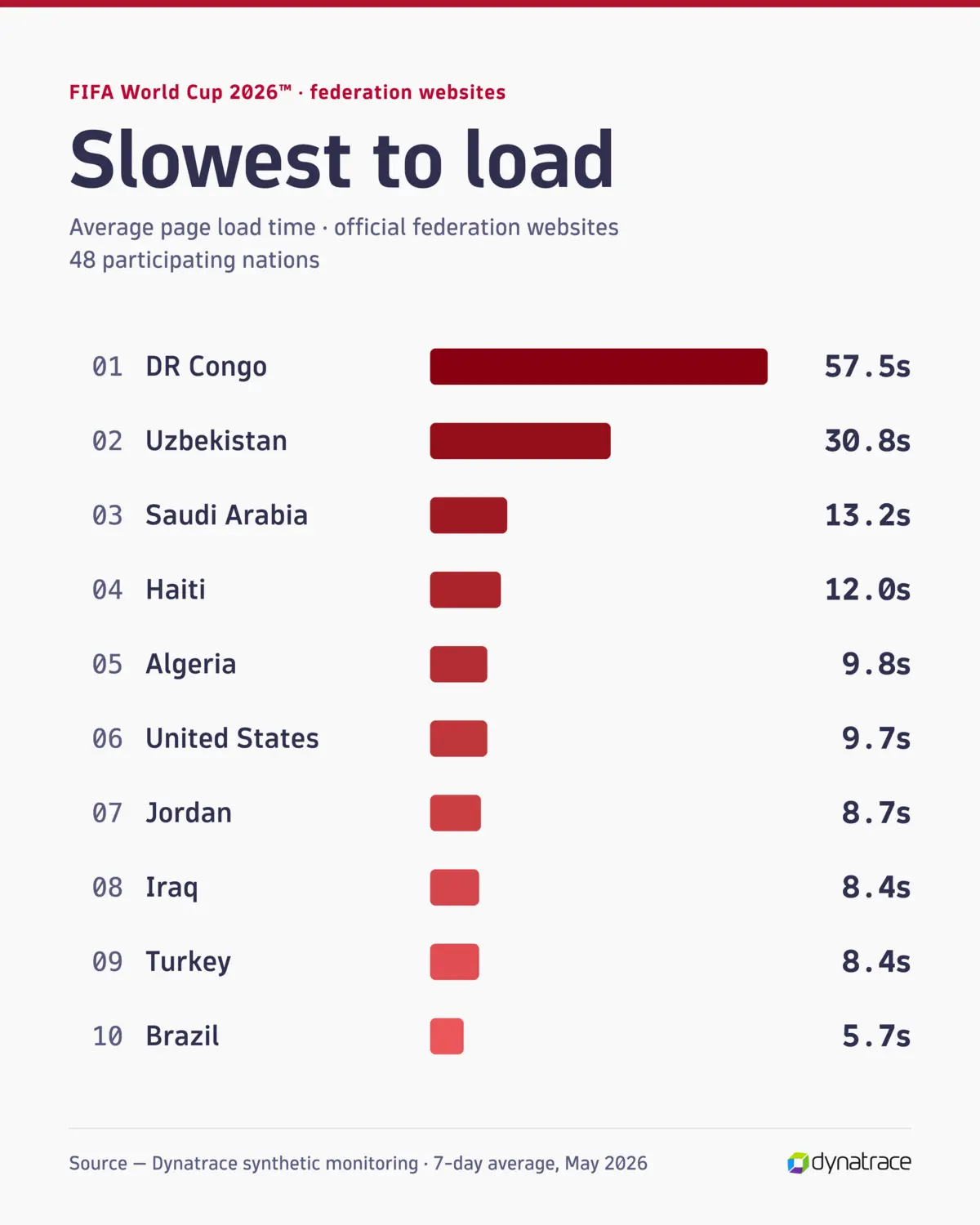
Fans are waiting nearly six seconds on average for federation web pages to load, with large gaps between the fastest and slowest sites. DR Congo recorded the slowest average page load time at 57.5 seconds, followed by Uzbekistan at 30.8 seconds and Saudi Arabia at 13.2 seconds.
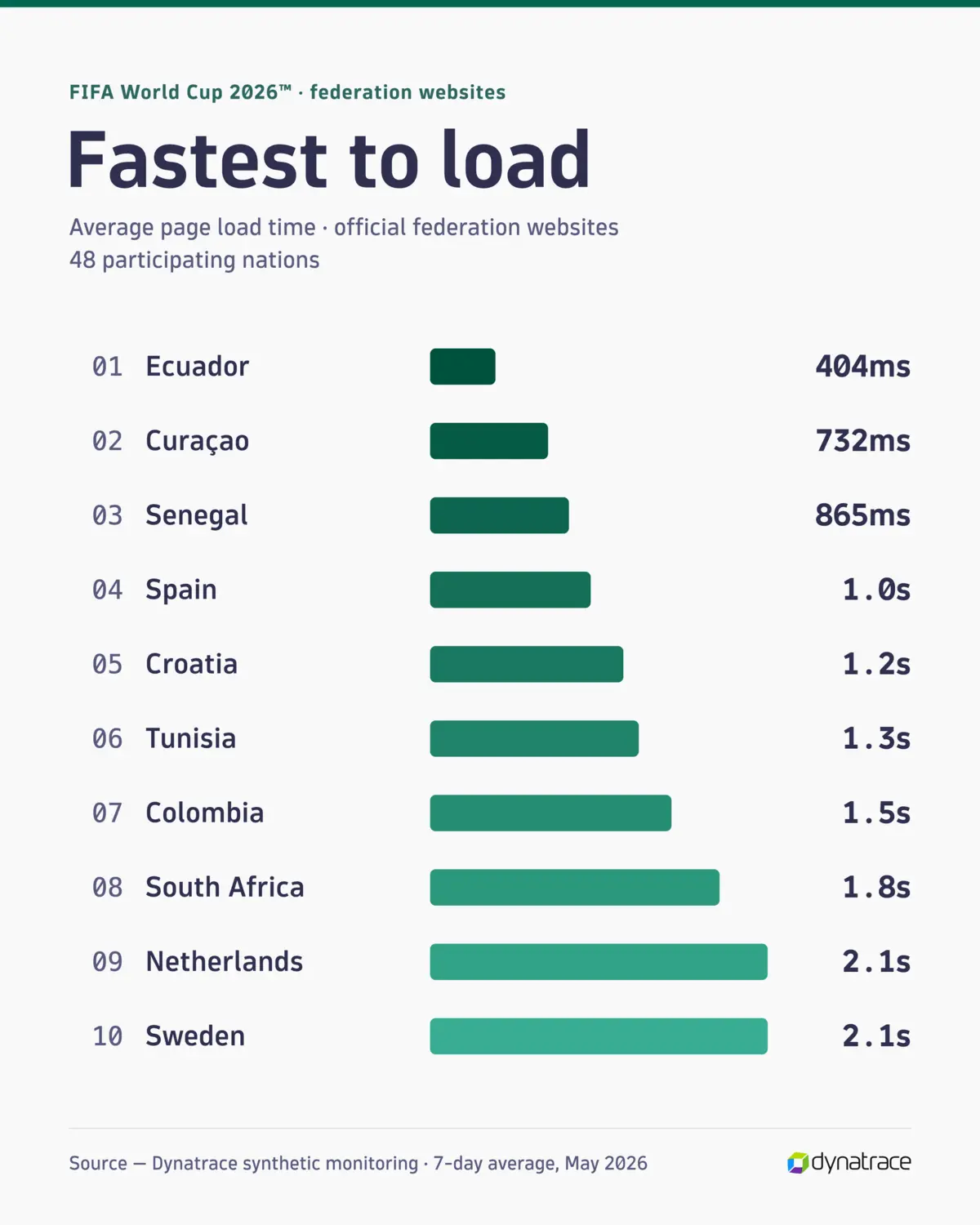
At the other end of the rankings, Ecuador had the fastest average load time at 0.404 seconds. Curaçao followed at 0.732 seconds, while Senegal ranked third at 0.865 seconds and Spain fourth at one second.
Some of the best-known football nations also ranked poorly. Brazil, a five-time World Cup winner, was in the bottom 10 with an average page load time of 5.7 seconds, while the United States, one of the tournament hosts, had the sixth-slowest federation website at 9.7 seconds.
The findings highlight uneven digital preparedness as football bodies and commercial partners compete for online attention during what is expected to be the largest men's World Cup to date. Fans increasingly rely on official sites for fixtures, tickets, live updates, video content and merchandise, making website speed a basic part of the tournament experience.
Federation rankings
Other federation websites near the bottom of the table included Haiti at 12.0 seconds, Algeria at 9.8 seconds, Jordan at 8.7 seconds, and Iraq and Turkey at 8.4 seconds. By contrast, Croatia averaged 1.2 seconds, Tunisia 1.3 seconds, Colombia 1.5 seconds, and South Africa 1.8 seconds, with the Netherlands and Sweden both at 2.1 seconds.
According to Dynatrace, several of the slowest federation websites shared similar technical issues, including image-heavy pages, large numbers of content requests and inefficient loading of page assets.
For the United States site, the analysis found that performance was affected by the volume of content loaded and the number of requests needed to render pages. That suggests even well-resourced sports organisations can run into problems when pages become too complex.
Sponsor sectors
The study also examined World Cup-specific campaign pages from 21 official sponsors and found wide variation between sectors. Retail and consumer services pages had the slowest average load times at 14.6 seconds, followed by hospitality, travel and leisure brands at 12.0 seconds.
Technology and telecommunications sponsors averaged 7.1 seconds, while energy and utilities averaged 6.7 seconds. Financial services and food and beverage brands both came in at 5.8 seconds.
The fastest sponsor sector was automotive, with average load times of 3.4 seconds. Consumer goods and apparel followed at 3.6 seconds.
The sector breakdown suggests the delays are not limited to football federations. Brands seeking to capture tournament-related traffic may also face friction if campaign pages take too long to load, particularly during matchdays or major announcement periods when online demand can rise sharply.
Dynatrace based the research on synthetic monitoring data gathered over a seven-day period in May. It examined official football federation websites linked to all 48 participating nations, as well as dedicated campaign pages used by tournament sponsors, and grouped sponsor pages into broader industry categories to identify patterns.
Bob Wambach, Vice President, Market and Customer Insights at Dynatrace, commented on the findings.
"Global sporting tournaments create huge spikes in digital traffic and major opportunities for brands to engage fans across multiple digital touchpoints, from viewing fixtures and live match updates through to social campaigns, promotions and branded content," said Bob Wambach, Vice President, Market and Customer Insights at Dynatrace.
"Fans now expect fast, seamless and always-on digital experiences wherever they interact online, but our analysis shows there is still a significant gap in digital readiness across the websites of participating nations and sponsors. Even small delays during peak moments can impact fan engagement, online revenue and brand reputation, which is why federations and sponsors cannot afford to overlook digital performance during the World Cup," Wambach said.