

Ireland startups face funding gap as scale-up push grows
Thu, 8th Oct 2026 (Today).webp)
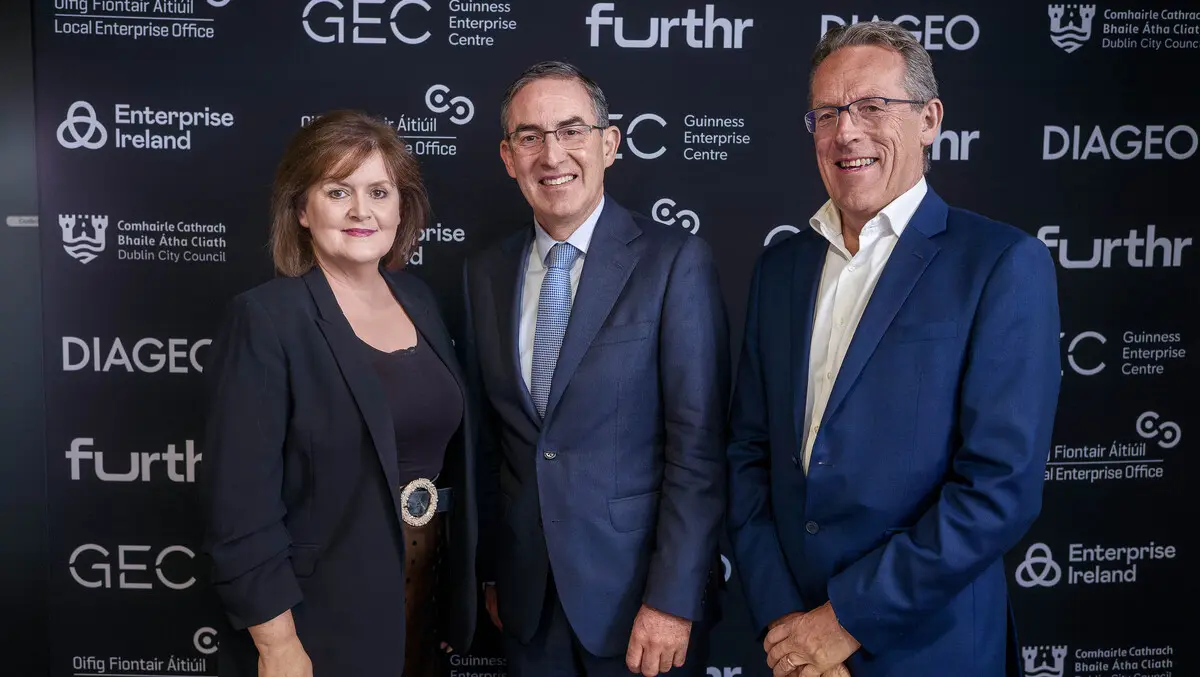
The Guinness Enterprise Centre held its inaugural Startup to Scale Conference in Dublin, where speakers focused on the difficulty Irish startups face in securing funding to expand.
Against the backdrop of Budget 2027, the conference brought together founders, investors and policymakers. Senior officials and startup leaders argued that the main pressure point in Ireland's startup system is financing companies beyond the early stages.
Declan Hughes, Secretary General of the Department of Enterprise, Tourism & Employment, highlighted measures announced in the budget, including Startup Ireland, tax changes for founders, and a EUR €1 billion scaling fund through the Ireland Strategic Investment Fund and Enterprise Ireland to help businesses secure growth capital.
He said the Government also wants to make the European market a more practical route for Irish companies seeking to expand, as an alternative to relying heavily on the United States.
Hughes linked the funding gap to a broader risk for the domestic economy, arguing that firms can lose their Irish base if they are forced overseas to raise larger rounds of finance.
"Over 25 years, the GEC has always been about more than providing space. Its real contribution has been creating a community of founders, mentors, investors, advisers and supporters who are genuinely invested in the success of others. Open, inclusive and collaborative, it created an environment where knowledge was shared, introductions were made, experience was passed on and ambition was encouraged. At its best, an enterprise ecosystem creates something incredibly powerful: a community that is ambitious for your success. That is one of the reasons the GEC has had such an enduring impact.
"If I had to identify the issue that most consistently emerges in discussions with scaling firms at this time, it is access to growth finance. Ireland has built a strong startup ecosystem, and we should acknowledge that. If we can get the financing right for the journey from promising company to global company, we can achieve so much more.
"Too often, firms reach a point where the capital they need is not available at the scale or speed required. The risk is obvious. If companies have to leave Ireland in order to scale, sooner or later they will stop being Irish companies in any meaningful sense. That is why the challenge for policy today is not simply supporting entrepreneurship. It is supporting ambition. That ambition was reflected in the decisions announced by Government in Budget 2027. The measures recognise a simple reality: if we want more companies to start, stay and scale from Ireland, we need to address the practical barriers they face.
"As we know, when we talk about scaling, we often look first to the United States. But one of the greatest untapped opportunities for Irish companies is much closer to home. The European Single Market gives access to 450 million consumers, one of the most attractive and highest-income markets in the world. In principle, it should be the natural scale-up platform for Irish businesses. In practice, many firms still encounter 27 regulatory systems rather than one market. That fragmentation imposes real costs on growing businesses.
"More than three decades after the creation of the Single Market, we still have unfinished business. That is why the EU and Ireland are now placing such emphasis on simplification, market integration and capital markets reform, through a One Europe, One Market roadmap. As part of our Presidency of the EU, we are pushing for a single company registration for companies, EU Inc - digital-first, complete in 48 hours, simpler and quicker, and transferable across the EU. If we get this right, the Single Market could become the most powerful scale-up platform in the world," Hughes said.
His comments placed startup funding within a wider industrial policy debate, as Irish officials seek to retain more domestically founded businesses while reducing the friction involved in selling and operating across the EU.
Funding gap
David Varian, Chairperson of the Guinness Enterprise Centre, said the Irish market has successfully produced startups but has struggled to support them when they need larger pools of capital.
He said the issue is most acute in later-stage funding rounds, where founders often face a choice between selling to overseas buyers and moving to larger financial centres to raise money.
"Ireland has built a world-class startup system; the challenge now is making sure our best companies can scale here rather than leave to do it. Ireland's weak spot has never been startup formation; it's the scale-up stage, the Series B-plus rounds of funding where startups either sell to a foreign acquirer or move to larger markets like London or the US to raise money.
"It's encouraging to see that Budget 2027 is seeking to address this, and our hope is that this will be built on in the years ahead. Further cuts to Capital Gains Tax would encourage entrepreneurship, reward risk, support reinvestment, help retain business ownership in Ireland and facilitate the scaling of home-grown Irish firms.
"In the GEC, we know that entrepreneurship rewards entire ecosystems. GEC companies alone have generated €2.5bn in revenue, and €150m of that was in 2025. They have also generated 25,000 jobs across the Irish economy. For its part, the GEC, as a not-for-profit, has reinvested €47m into services and supports for founders. But it is incumbent on all stakeholders to support founders, equipping them with the knowledge, supports and investment they need to become not just Irish businesses, but Irish businesses scaling from Ireland and growing internationally," Varian said.
Companies linked to the centre's network have generated EUR €2.5 billion in revenue and 25,000 jobs across the Irish economy, it said, using the figures to argue that startup policy has wider effects beyond individual firms. It added that it had reinvested EUR €47 million into founder services and support.
Conference sessions also covered public support available through Enterprise Ireland, Local Enterprise Office Dublin City, Furthr and The Mill Enterprise Centre Drogheda. Founders and investors took part in panels on regulation, fundraising and international expansion, with several speakers outlining the practical barriers that can slow growth even after a company has established a product and market position.
The central message from the event was that Ireland's challenge is no longer simply getting startups off the ground, but ensuring they can secure enough finance to remain headquartered in the country as they grow.