Marketing strategy stories
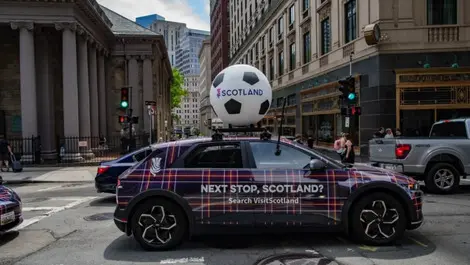
Boston commuters saw tartan taxis and bus ads as VisitScotland sought to turn Scotland's football spotlight into bookings from US travellers.
Better customer data is becoming essential as AI agents start to shape product discovery, loyalty and campaign choices in real time.
Demand for AI oversight tools is rising as finance teams automate more processes, prompting MindBridge to expand its leadership structure.
Marketers are finding that AI can boost output without lifting quality unless they feed it richer audience and community signals.
The move puts product, marketing and partnerships under one executive as Relativity intensifies its push to embed AI in legal workflows.
Marketers can now measure how AI systems rank their brands after Tracksuit added Hall's visibility tool to its tracking platform.
The appointments broaden Wildfire's UK brief into home energy and security as brands compete for visibility in the connected home market.
Most teams are still at an early stage, with 83% of respondents in the lower AI maturity levels and no one reaching the top two.
The expanded sponsorship puts Essendon's AFLW programme on more commercial footing as MOVA opens its latest robot vacuum push in Australia.
Marketers are under pressure to prove returns sooner, driving demand for tools that test ad spending before budgets are committed.
TV viewers will now see Squashies in a broader push to grow awareness, as Swizzels adapts the brand's social concept for ITV1.
The survey suggests marketers could face tighter budgets as boards increasingly back sales and AI over long-term demand generation.
Most UK mid-market service firms are failing to stand out, with IT suppliers among the least distinctive and most easily overlooked.
The insurer wants clearer online content to stay visible as customers increasingly rely on AI tools for comparisons and recommendations.
By tying strategy to revenue outcomes, the platform aims to help mid-sized firms prove marketing's return and cut tool sprawl.
Businesses risk missing growth in a more diverse Australia unless they measure cultural identity alongside age, income and life stage.
The Connecticut-based supplier is betting on a veteran marketer to lift brand awareness as it targets growth in specialist industrial markets.
Customers seeking more tailored rewards will now find Hyundai Card's niche products separated from its mainstream range under a new brand.
Half of Australians now use generative AI, giving brands less than two years to shape how systems describe them to customers.
Most creators now send affiliate traffic to several shops, weakening brands' control over where sales leads are sent and tracked.