

Cloudinary launches agent layer for visual media workflows
Wed, 5th Aug 2026 (Today).webp)
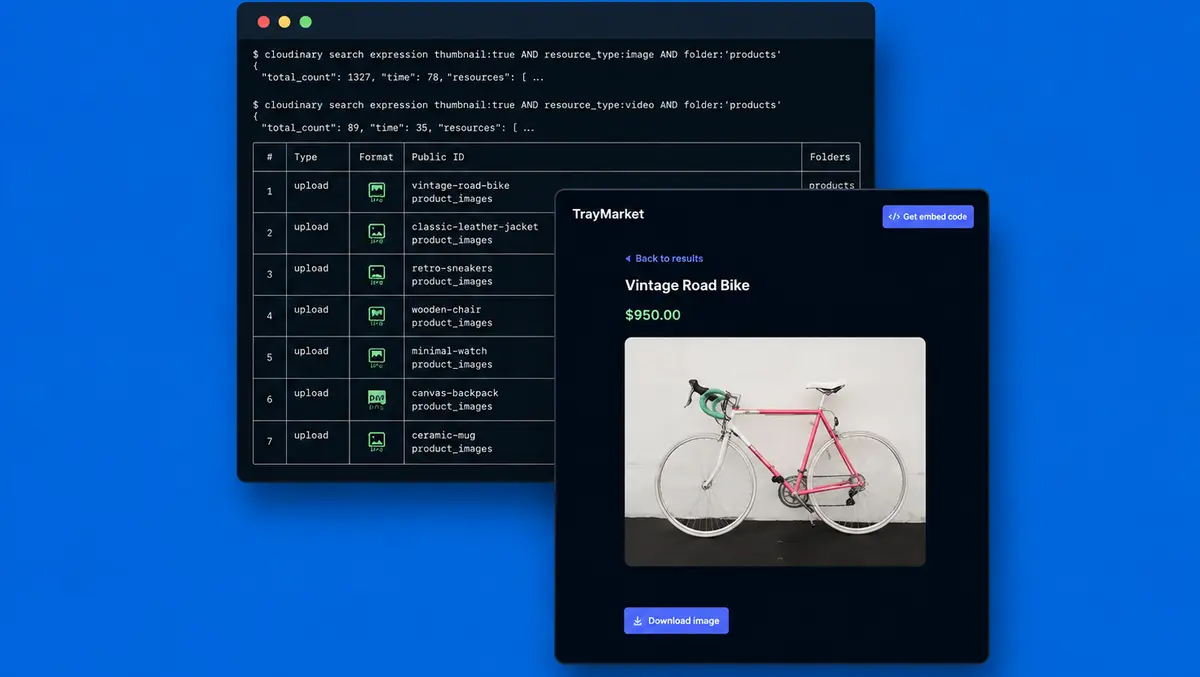
Cloudinary has launched an Agent Experience layer for AI agents building visual media workflows, describing it as the first visual media service designed for agent-native development.
The move comes as companies look for ways to let software agents set up services and carry out development tasks with less human intervention. The new layer allows an agent to create a self-provisioned "Claimable Cloud", work within that environment and then hand control to a human developer without losing progress.
That approach addresses a common issue in software tooling: an AI assistant can suggest a service but still depends on a person to open an account and complete the initial setup. Under Cloudinary's model, the agent can provision an environment on the same production infrastructure used by customers and begin integrating media functions into an application without human configuration.
Cloudinary is positioning the launch around a broader shift in software development, in which developers define objectives and AI systems carry out the implementation. Rather than handling media as simple files or URLs, the platform presents images and videos as structured assets with metadata, permissions, usage rules and relationships that software agents can read and act on.
Media context
Cloudinary argues that this structure gives agents enough context to complete routine media tasks that would otherwise require manual review or custom code. Those tasks include locating approved assets, applying governance rules, and carrying out transformations or publishing steps.
One example is a marketplace application that receives user-generated images. In that scenario, an agent could check each image against brand and compliance rules, route disputed material for human review and publish approved content to the correct channels.
Another use case involves social media publishing. A developer could direct an agent to assemble a product launch campaign across Instagram, TikTok and LinkedIn, with the agent selecting approved material, resizing it for each platform, applying overlays and preparing posts for scheduled delivery.
The launch also ties into a growing policy debate around AI-generated media and disclosure requirements. In Europe, enforcement of transparency rules under the AI Act has increased pressure on companies to identify machine-generated or edited content and retain machine-readable information about provenance.
Cloudinary said media created within its own image generation and image-to-video tools is automatically classified, tagged and stored under existing policies. It added that assets can carry embedded provenance and disclosure metadata through transformation and delivery, rather than relying on users to add those details later.
Developer workflow
Developers remain responsible for application design and product decisions, while agents act as execution tools within guardrails set by the developer. In practice, that means a user can define policies for governance, permissions and usage, then let an agent apply those rules across a media workflow.
The new layer includes support for the Model Context Protocol, agent-focused tooling, documentation designed for large language models, software development kits tuned for AI use and application programming interfaces intended to produce predictable outputs. The aim is to reduce the need for extra configuration each time an agent takes on a task.
Cloudinary has described itself as AI-native since its founding, and the launch extends that position into what it sees as an agent-led phase of software development. Its central argument is that agents should not need to infer what a platform can do from a human-oriented interface, but should be able to invoke functions directly through machine-friendly tooling.
That matters as businesses experiment with broader use of AI agents. Industry surveys indicate that many enterprises expect to deploy agents from established technology providers, suggesting demand for infrastructure that can be provisioned and managed automatically rather than only through conventional user onboarding.
Tal Lev-Ami, Co-Founder and Chief Technology Officer at Cloudinary, said the shift reflects a new development model.
"Software is no longer built exclusively by humans writing code. Developers increasingly work alongside AI agents that discover services, evaluate architectures, provision infrastructure, and build integrations - and we built Cloudinary to meet this reality," said Tal Lev-Ami, Co-Founder and Chief Technology Officer at Cloudinary.
"This isn't about replacing developers, it's about giving them a more capable execution model. When an agent can provision its own environment, understand what's in a media library, and automate complete workflows without custom logic, developers can focus on what actually matters - application design and product decisions. That's the infrastructure we built," Lev-Ami said.
Cloudinary said autonomous provisioning is available to any agent without an account, payment method or human configuration. MCP server support, agent-native tooling, Skills packages and AI-optimised SDKs are available to customers.